
by Grand Moroccan Journey
Share
by Grand Moroccan Journey
Share
Morocco Tours for Seniors: A Comfortable Guide to Exploring Morocco
Morocco can be an excellent destination for mature travelers who want culture, history, varied landscapes, good food and memorable photography without turning every day into a physical challenge. The key is not age itself, but how the trip is planned. Well-designed Morocco tours for seniors allow more time between destinations, comfortable private transportation, carefully chosen accommodation and enough flexibility to slow down whenever needed.
For travelers in their 50s, 60s, 70s and beyond, Morocco offers an unusual amount of variety within one trip. You can explore the historic streets of Rabat and Fes, photograph Chefchaouen, cross the Atlas Mountains, watch sunset over the Sahara and finish with a relaxed stay in Marrakech or Essaouira.
This guide explains what senior travelers should realistically expect, including walking conditions, riad stairs, desert travel, driving distances, weather, accommodation and itinerary length. It also shows how a private Morocco tour for seniors can be adapted around your own pace rather than asking you to adapt to a fixed group schedule.
Why Morocco Appeals to Senior Travelers
Morocco appeals to mature travelers because history, architecture, landscapes, cuisine and everyday culture can all be experienced within a relatively compact itinerary. A trip can combine Roman ruins, medieval medinas, Atlantic coastal towns, mountain scenery, palm-filled valleys, traditional kasbahs and Sahara dunes without requiring adventurous trekking or strenuous activities.
For travelers interested in history, cities such as Rabat, Fes and Marrakech offer layers of architecture and cultural heritage. Morocco also has nine properties on UNESCO’s World Heritage List, including the medinas of Fes, Marrakech and Essaouira, the historic city of Rabat and the Ksar of Ait Ben Haddou. You can learn more through the UNESCO World Heritage listing for Morocco.
Photography is another major reason mature travelers choose Morocco. The blue streets of Chefchaouen, intricate architecture of Fes, kasbahs of southern Morocco, changing light over Erg Chebbi and fishing port of Essaouira provide very different subjects. A slower itinerary is often an advantage because good photography rarely benefits from rushing.
Morocco also works well for travelers who enjoy observing everyday life. A guided walk through a medina, a quiet tea stop, a visit to an artisan workshop or a conversation in a small village can be just as rewarding as visiting a famous monument.
Is Morocco a Good Destination for Seniors?
Yes, Morocco can be very rewarding for senior travelers, provided the itinerary matches the traveler’s mobility, preferred pace and comfort requirements. A traveler who is 72 and walks regularly may be comfortable with more activity than someone younger with limited mobility. It makes more sense to design the trip around the individual than around an age category.
The biggest considerations are itinerary pace, season, hotel selection, walking distances, vehicle comfort, driving time and the number of hotel changes. A fast circuit that changes accommodation almost every night can become tiring regardless of age.
For many older adults, two-night stays are particularly valuable. They reduce packing and unpacking and create space for slower mornings, afternoon rests or additional sightseeing when energy levels are good.
Morocco does have practical challenges. Historic medinas often contain uneven paving, narrow passages and occasional steps. Traditional riads may have steep staircases and no elevator. Some Sahara itineraries involve long driving days. These are not necessarily reasons to avoid Morocco; they are reasons to plan it carefully.
Private Morocco Tours vs Group Tours for Seniors
Both private and group tours can work for seniors, but private travel offers considerably more control over pace, walking time, departure times and rest stops. Group tours may suit travelers who enjoy socializing and prefer a fixed itinerary, while private Morocco tours are particularly useful when comfort, photography, mobility or flexibility are priorities.
On a group tour, departure times and sightseeing schedules normally need to work for everyone. With a private driver and itinerary, a morning can start later after a long previous day. An extra coffee or restroom stop can be added without affecting other travelers. A walking tour can be shortened if you are tired, or extended when you are enjoying a particular place.
Private travel is also useful for photographers. If the light is beautiful over the Atlas Mountains or a roadside viewpoint is particularly interesting, there is more freedom to stop. Likewise, travelers who prefer museums, architecture, food or gardens can devote more time to those interests.
Group tours still have advantages. They can offer a sociable atmosphere and sometimes a lower per-person price. The better choice depends on what you value most. For mature travelers who prioritize personal service and control over their daily rhythm, however, private Morocco tours and customizable itineraries are worth considering.
Best Places in Morocco for Senior Travelers
The best destinations for senior travelers depend on interests and mobility, but Rabat, Chefchaouen, Fes, Merzouga, Dades Valley, Skoura, Ouarzazate, Marrakech and Essaouira can combine particularly well. The important point is not to include all of them simply because they appear on a map. Fewer places enjoyed properly often create a better trip.
Casablanca
Casablanca is an important international gateway and is often the first or last stop on a Morocco itinerary. Its major attraction for many visitors is the Hassan II Mosque, dramatically positioned beside the Atlantic Ocean.
For seniors arriving after a long flight from the USA, Canada or Australia, it may make sense to keep the first day light. Depending on arrival time, you can rest in Casablanca or transfer to Rabat rather than beginning an intensive sightseeing schedule immediately.
Rabat
Rabat is an excellent introduction to Morocco. The capital feels calmer than Fes or Marrakech and offers historical attractions including the Hassan Tower, Mausoleum of Mohammed V, Kasbah of the Udayas and archaeological sites.
Its combination of broad modern streets and historic quarters can make sightseeing relatively manageable. Two nights allow travelers to enjoy the city without treating it simply as a stop between Casablanca and Chefchaouen.
Chefchaouen
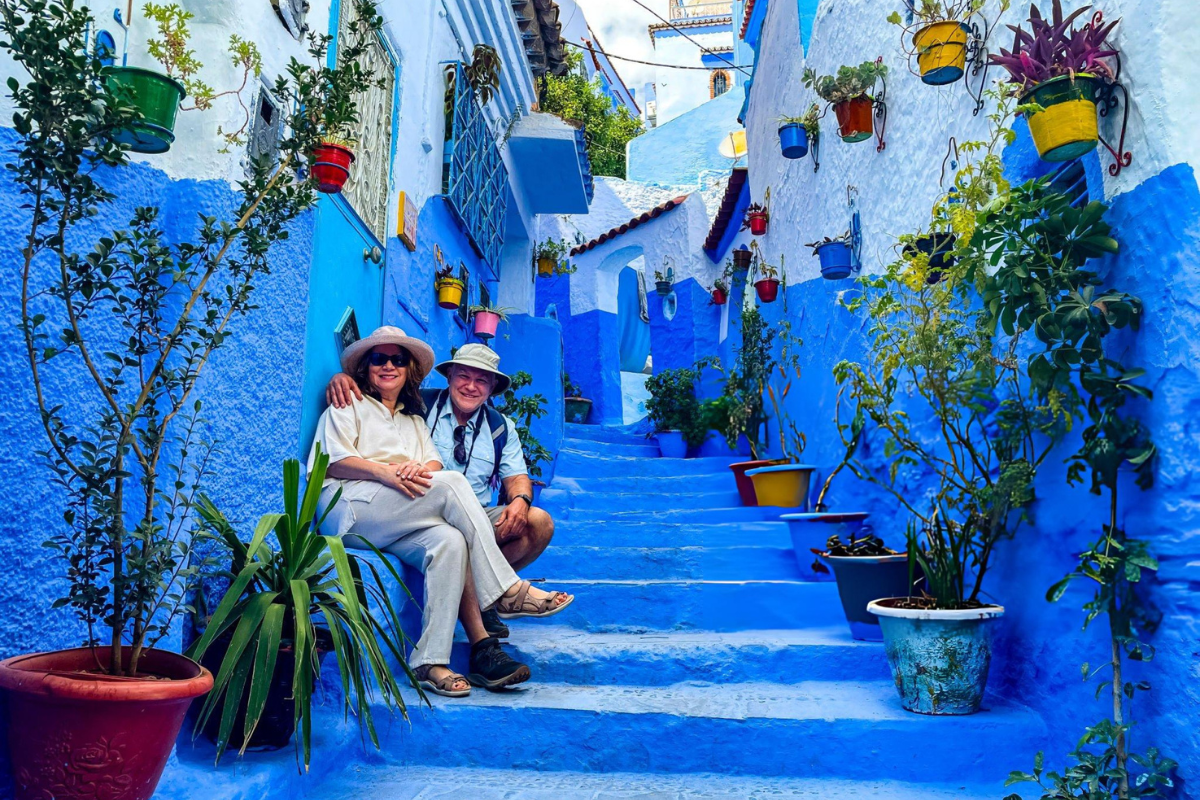
Chefchaouen is especially rewarding for photography. Its blue-painted streets, small squares, doorways and Rif Mountain setting provide excellent visual subjects without requiring a long checklist of monuments.
However, the town is built on slopes. Cobblestones, inclines and stairs can be tiring for travelers with knee or mobility concerns. Hotel location matters considerably. Ask how many steps are required to reach the room and how far the accommodation is from vehicle access.
Two nights are preferable when possible. This allows time to explore slowly rather than arriving late one afternoon and departing immediately the next morning.
Fes
Fes is one of Morocco’s most culturally significant destinations and often one of the most memorable parts of a first trip. Its old medina is dense, atmospheric and filled with historic architecture, markets, workshops and traditional crafts.
It also requires realistic planning. Fes el-Bali has narrow streets and uneven surfaces, and vehicle access is limited within the medina. A knowledgeable private guide can adjust the walking route, include breaks and concentrate on the places that genuinely interest you.
Senior travelers who enjoy history should consider at least two nights, and three can be even better if you want a relaxed guided day followed by free time.
Middle Atlas
The Middle Atlas is often experienced while traveling between Fes and southern Morocco. Forests, mountain landscapes, towns such as Ifrane and changing scenery provide a very different view of the country.
The main consideration is driving time. Rather than treating the route to the Sahara as a race, senior-friendly itineraries can include scenic stops or divide the journey with an overnight stay.
Merzouga and Erg Chebbi
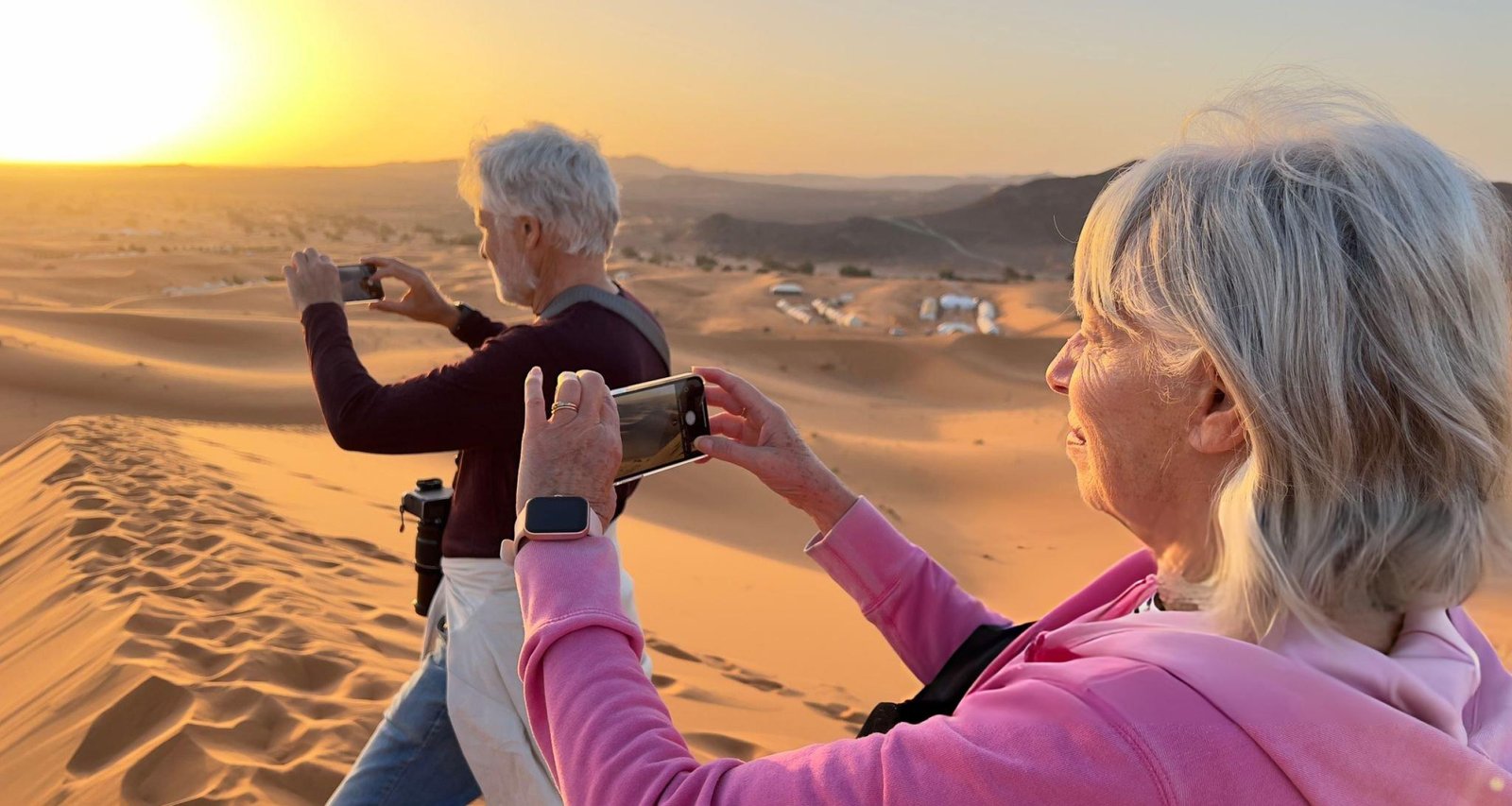
Merzouga sits beside the dunes of Erg Chebbi and is one of Morocco’s best-known Sahara destinations. Watching the dunes change color toward sunset can be enjoyed without strenuous activity.
Camel riding is not the only way to experience the desert. Depending on the camp and itinerary, 4×4 transfers may be available. Travelers with hip, back, knee or balance concerns should discuss the most comfortable option before booking rather than assuming a camel ride is compulsory.
Dades Valley
Dades provides a useful break between the Sahara and Marrakech. The valley is known for dramatic rock formations, traditional villages and scenic roads.
It works especially well for travelers who enjoy landscapes and photography. Instead of trying to cover the desert-to-Marrakech route in one exhausting day, an overnight in the valley can make the journey much more comfortable.
Skoura
Skoura is a palm-filled oasis region east of Ouarzazate. It can offer a quieter contrast to Morocco’s major cities and is particularly appealing to travelers interested in architecture, landscapes and traditional kasbahs.
A comfortable lodge or kasbah-style hotel here can also provide welcome downtime between more active sightseeing days.
Ouarzazate
Ouarzazate is a practical base for southern Morocco and the surrounding kasbah country. The area is associated with cinema, desert landscapes and historic architecture.
Its broad roads and vehicle access can make logistics simpler than in the old medinas. Travelers can use Ouarzazate as a comfortable stop before crossing the High Atlas toward Marrakech.
Ait Ben Haddou
The Ksar of Ait Ben Haddou is one of Morocco’s UNESCO-listed cultural sites. Its earthen architecture makes it particularly rewarding for history and photography enthusiasts.
Exploring higher sections involves slopes and steps, but travelers do not necessarily need to climb to the top to appreciate the architecture and surrounding landscape. A private itinerary allows the visit to be adapted to your walking comfort.
Marrakech
Marrakech offers palaces, gardens, markets, architecture, restaurants and one of Morocco’s most famous medinas. It is stimulating but can also feel intense, particularly after a long touring itinerary.
For senior travelers, a private guide can be valuable in the medina. Plan sightseeing in manageable blocks rather than trying to cover every monument in one day. A well-located hotel or riad and an afternoon rest can make a significant difference.
Essaouira
Essaouira is a good choice for travelers who want to finish their trip at a gentler pace. Its Atlantic setting, fishing harbor, fortified medina and art scene make it appealing to photographers and cultural travelers.
The medina is comparatively compact, although paving can still be uneven. Two or three nights here can provide a pleasant contrast after Marrakech or a longer cross-country itinerary.
Visiting Morocco’s Sahara as a Senior Traveler
Travelers over 60 or 70 can visit Morocco’s Sahara, but the experience should be planned around transportation, camp comfort, temperature and individual mobility. Camel riding is not essential to appreciating the dunes, and many travelers prefer reaching their camp or desert viewpoints by 4×4.
Merzouga is the gateway to Erg Chebbi, where large dunes rise beside the edge of the settled area. This makes it possible to combine desert scenery with comfortable accommodation.
When choosing a desert camp, look beyond photographs of the tents. Ask about private bathrooms, proper beds, heating or cooling arrangements where applicable, distance between tents and dining areas, and how guests reach the camp.
Walking on soft sand requires more effort than walking the same distance on a paved surface. If balance or joint comfort is a concern, tell your tour designer in advance. There is no requirement to climb a high dune to enjoy sunset.
Temperature can change substantially between day and night and between seasons. Layers are useful, especially during cooler months. In warmer periods, sun protection, water and sensible timing become particularly important.
For many seniors, two nights around Merzouga are more enjoyable than a single rushed overnight. One night can be devoted to the desert camp, while the additional day creates time for a 4×4 excursion, photography, rest or simply enjoying the landscape without immediately getting back into the vehicle.
If the Sahara is a priority, consider a 10-day private Morocco itinerary or a longer 12–14 day route rather than trying to squeeze Merzouga into a short city break.
How Much Walking Is Required in Morocco?
Walking requirements vary considerably. Modern areas can be straightforward, while historic medinas may involve cobblestones, uneven paving, narrow lanes, slopes and stairs. Travelers who can comfortably walk for an hour with breaks may have very different requirements from someone who needs vehicle access close to each attraction.
Fes is usually one of the more demanding destinations because much of the historic medina is pedestrianized. Marrakech also involves walking, although routes can be adjusted. Chefchaouen’s slopes are another consideration.
Comfortable shoes with good grip are more useful than formal footwear for sightseeing. A walking stick may help travelers who already use one at home, particularly on uneven surfaces.
Most importantly, tell your travel company about mobility preferences before hotels and guided visits are booked. Saying “I can walk, but I prefer no more than 30 minutes without a break” is more useful than simply stating an age.
Choosing Riads and Hotels for Older Travelers
A beautiful hotel is not automatically a comfortable hotel for an older traveler. Traditional Moroccan riads can be charming and atmospheric, but some have narrow staircases, no elevators and rooms spread across several levels. Accessibility should therefore be checked property by property.
Before confirming accommodation, ask about elevators, ground-floor rooms, the number of stairs, walk-in showers, bathroom layout, air conditioning, heating and luggage assistance.
Location matters too. A riad deep inside a pedestrian-only medina may require a longer walk from the vehicle drop-off. For some travelers this is part of the experience; for others, accommodation near an accessible medina gate is a better choice.
Also consider whether the property has an on-site restaurant. After a full sightseeing day, being able to eat dinner at the hotel or riad can be much more relaxing than walking out again at night.
Travelers seeking higher comfort levels can explore tailor-made luxury Morocco tours, but accessibility questions should still be asked even at premium properties.
Best Time to Visit Morocco for Seniors
Spring and autumn are often attractive periods for mature travelers because they can avoid some of the more extreme summer heat, but there is no single perfect month for every region. Morocco’s Atlantic coast, inland cities, mountains and Sahara have different climate patterns, so season should be matched to the itinerary.
March to May
Spring is popular for cultural touring, landscapes and outdoor sightseeing. Temperatures can be pleasant in many regions, although conditions vary by altitude and location.
This period works well for itineraries combining imperial cities, valleys, mountains and the desert. Travelers should still bring layers because mornings, evenings and mountain areas may feel considerably different from daytime conditions.
September to November
Autumn is another strong period for broad Morocco itineraries. As the most intense summer heat eases, city sightseeing and southern routes can become more comfortable.
October and November can be especially appealing for photographers because a varied itinerary can include medinas, mountain landscapes and desert light without relying on peak summer conditions.
Winter
Winter can be excellent for city travel and southern Morocco, but travelers should not assume Morocco is warm everywhere all day. Nights in the desert and mountain regions can become cold, and accommodation heating is worth checking.
Winter can suit travelers who prefer cooler sightseeing conditions and are comfortable packing layers.
Summer
Summer requires more careful planning, especially for Marrakech, Fes and the Sahara, where high temperatures can make daytime sightseeing uncomfortable.
If summer is your only opportunity to travel, itineraries can emphasize earlier sightseeing, air-conditioned transportation, rest periods and coastal destinations such as Essaouira. Check seasonal information with the Moroccan National Tourist Office travel guide before departure.
How Many Days Should Seniors Spend in Morocco?
For most first-time senior travelers, 10 to 14 days provides a better balance than trying to see Morocco in one week. Morocco is larger than many visitors expect, and adding the Sahara to northern cities creates significant driving distances.
7 Days
A seven-day Morocco itinerary can work well when you concentrate on one region. You might combine Casablanca, Rabat, Fes and Marrakech, or focus on Marrakech and southern Morocco.
Trying to include Chefchaouen, Fes, Merzouga and Marrakech in seven days can create too much driving for travelers seeking a genuinely relaxed trip.
10 Days
Ten days provides a useful balance for first-time visitors. It allows several major destinations plus the Sahara, although some travel days will still be substantial.
A 10-day senior-friendly Morocco itinerary can be used as a starting point and then adjusted around your arrival city and interests.
12–14 Days
For many senior couples, 12 to 14 days is an excellent length. It creates room for two-night stays, slower sightseeing and a more comfortable route between northern Morocco and the Sahara.
Instead of simply adding more attractions, use the extra days to reduce pressure. An additional night in Fes, Chefchaouen, Merzouga or Marrakech can improve the entire journey.
Two Weeks or Longer
Two weeks or more is particularly worthwhile for photographers and travelers interested in deeper cultural experiences. You can include Essaouira, additional rural areas or longer stays without turning every day into a transfer.
Example 14-Day Morocco Itinerary for Seniors
A comfortable 14-day Morocco itinerary should prioritize sensible driving stages and multiple-night stays rather than maximizing the number of attractions. The following route is an example only. Arrival airports, mobility, interests, season and flight schedules should determine the final itinerary.
- Day 1 – Casablanca arrival and Rabat: Meet your private driver and transfer to Rabat. Keep sightseeing optional after the flight.
- Day 2 – Rabat: Enjoy a relaxed guided exploration of the capital with time for breaks.
- Day 3 – Rabat to Chefchaouen: Travel north with scenic stops and settle into your accommodation.
- Day 4 – Chefchaouen: Explore the blue medina slowly, allowing extra time for photography and cafés.
- Day 5 – Chefchaouen to Fes: Continue to Fes and enjoy a quiet evening.
- Day 6 – Guided Fes: Explore selected highlights of Fes with a private local guide and regular breaks.
- Day 7 – Fes: Keep an additional relaxed day for museums, photography, crafts or rest.
- Day 8 – Fes to Midelt: Cross the Middle Atlas in stages rather than driving all the way to the Sahara.
- Day 9 – Midelt to Merzouga: Continue through the Ziz Valley toward Erg Chebbi with photography and comfort stops.
- Day 10 – Sahara: Enjoy a relaxed desert day with a 4×4 excursion, optional camel experience and sunset photography.
- Day 11 – Merzouga to Dades Valley: Travel through southern landscapes with stops along the way.
- Day 12 – Dades, Skoura and Ouarzazate: Explore at a comfortable pace and overnight around Ouarzazate or Skoura.
- Day 13 – Ait Ben Haddou to Marrakech: Visit the historic ksar according to your walking ability before crossing the Atlas Mountains.
- Day 14 – Marrakech: Enjoy a private guided visit or adapt the day around your departure flight.
This itinerary can easily be extended by adding nights in Marrakech or Essaouira. It can also be shortened by removing Chefchaouen or the Sahara rather than compressing the same route into fewer days.
Morocco for Senior Photography Travelers
Morocco photography tours for seniors work particularly well as private trips because photographers benefit from flexible timing, fewer rushed departures and the freedom to stop when light or scenery is interesting. A slower photographic itinerary can also reduce the physical pressure of carrying equipment through several destinations in one day.
Chefchaouen is excellent for architectural details, doors, blue streets and street scenes. Early mornings can provide quieter conditions before day visitors become more numerous.
Fes offers craftsmanship, architecture, markets and layered street scenes. Because the medina can be physically demanding, a private guide can help create a route focused on specific photographic interests rather than walking aimlessly for hours.
In the Sahara, sunrise and sunset are natural priorities. Staying two nights provides more opportunities if the first evening’s light is less interesting than expected and avoids building an entire desert experience around a few rushed hours.
Dades, Skoura and Ait Ben Haddou are strong locations for landscape and architectural photography, while the Atlas routes offer viewpoints that can change dramatically with season and weather.
Essaouira provides a completely different visual environment: fishing boats, fortifications, Atlantic light, whitewashed architecture and street life. Marrakech offers markets, gardens, palaces and evening activity around Jemaa el-Fnaa.
Travelers carrying heavier cameras and lenses should think about more than photographic locations. Ask how close the vehicle can get to your riad, avoid unnecessary hotel changes and consider using a lighter day bag rather than carrying your complete kit during every guided walk.
Grand Moroccan Journey offers private Morocco photography tours that can be adapted for mature photographers, including timing around sunrise and sunset and additional stops along scenic routes.
Food and Dining for Mature Travelers
Moroccan cuisine offers plenty of choice, and private tours make it easier to communicate dietary preferences and select restaurants that suit each traveler. Common dishes include tagines, couscous, grilled meats and vegetables, soups, salads, breads and regional specialties.
Breakfast at riads and hotels often includes bread, pastries, eggs, fruit, yogurt, jams, coffee and Moroccan tea, although the exact selection varies.
If you have allergies or specific dietary requirements, communicate them before the tour and confirm them again when appropriate. Do not assume that every kitchen will interpret terms such as “gluten-free” or “low sodium” in exactly the same way.
On long driving days, keeping drinking water accessible in the vehicle is sensible. Travelers may also prefer lighter lunches when a larger dinner is planned at the hotel or desert camp.
Transportation and Driving Distances
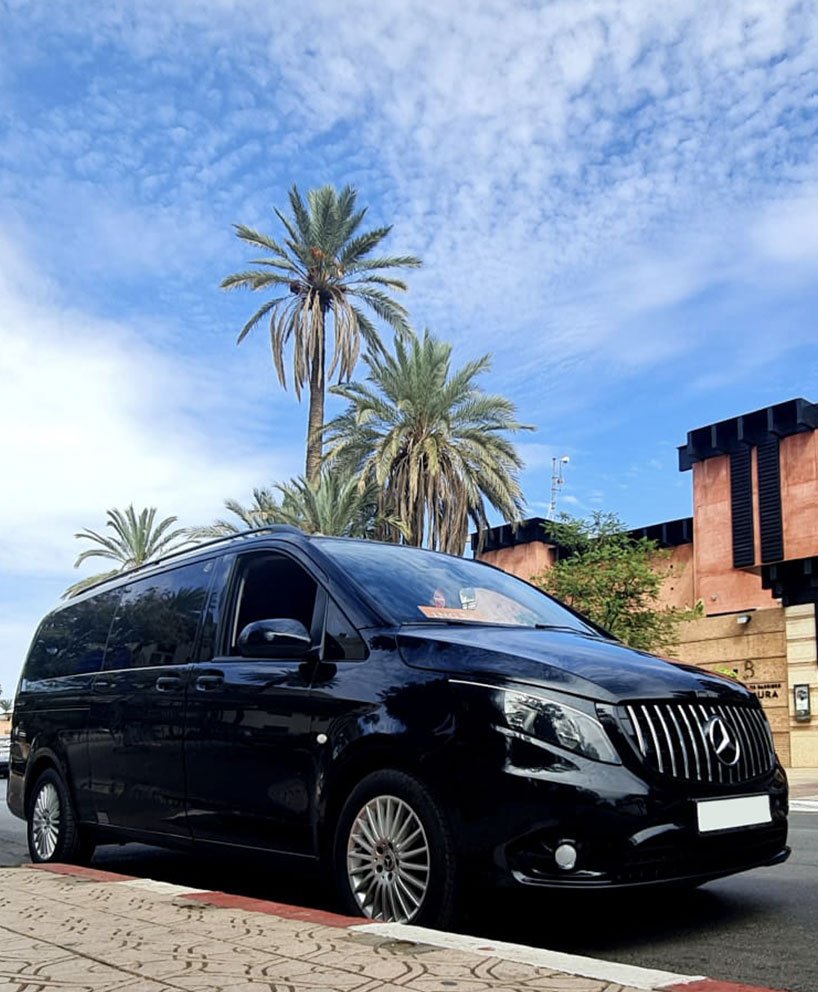
Transportation is one of the most important factors in a comfortable Morocco vacation for seniors because the country’s major destinations are spread across significant distances. A private air-conditioned SUV, 4×4 or comfortable minivan can make long routes considerably easier.
The right vehicle depends on the number of travelers and luggage. Two travelers may appreciate an SUV or 4×4, while a small family or group may prefer a minivan with more luggage capacity.
A private driver also allows regular stops for coffee, restrooms, photographs or simply stretching your legs. These stops are particularly useful on routes between Fes and Merzouga or between the Sahara and Marrakech.
Breaking long routes into stages is often better than choosing an itinerary solely because it reaches the next famous destination faster. Midelt, Dades, Skoura and Ouarzazate can all serve as useful overnight points depending on the route.
Practical Tips for Travelers Over 60
Good preparation for Morocco is mostly about comfort: appropriate footwear, manageable luggage, sun protection, travel documents and realistic daily expectations. Mature travelers do not need a completely different packing list, but a few details can make sightseeing and transfers easier.
- Wear supportive shoes: Medina surfaces can be uneven, so choose footwear you already know is comfortable.
- Protect yourself from the sun: Bring a hat, sunglasses and appropriate sun protection, particularly for southern Morocco.
- Carry water: Keep water accessible during driving and sightseeing days.
- Pack manageable luggage: Smaller or lighter cases are easier in traditional properties with stairs.
- Bring medications in appropriate quantities: Keep essential medication accessible and carry prescriptions or supporting documentation where appropriate.
- Arrange suitable travel insurance: Review coverage, exclusions, activities and any relevant conditions before departure.
- Keep some Moroccan dirhams: Cards are useful in many hotels and businesses, but cash remains practical for smaller purchases and tips.
- Consider mobile connectivity: International roaming, local SIM or eSIM options can make communication easier.
- Dress in layers: Temperatures can differ significantly between the coast, mountains, cities and desert.
- Keep photography equipment manageable: Carry only the equipment you expect to use during longer medina walks.
Entry requirements and official travel information can change. Check current passport and entry information with the Moroccan National Tourist Office and your own government’s travel guidance before departure. U.S. travelers can also review the latest U.S. Department of State information for Morocco.
Is Morocco Suitable for Travelers Over 70?
Morocco can be suitable for travelers over 70, but chronological age alone is not a useful measure of travel ability. Some travelers in their 70s walk several miles comfortably, while others prefer short walks and frequent rests. The itinerary should reflect the individual rather than assumptions about age.
For Morocco tours for over 70s, useful adjustments may include two or three nights in key cities, avoiding very early starts, choosing hotels with elevators or ground-floor rooms, shortening medina walks and using 4×4 transportation in the desert instead of a camel.
Long transfer days should also be discussed honestly. If you dislike sitting in a vehicle for extended periods, the itinerary can include intermediate overnight stops or concentrate on fewer regions.
If mobility is limited, provide specific information when requesting a quotation. Explain how far you can comfortably walk, whether stairs are difficult, whether you use a mobility aid and what bathroom or room features matter. This makes it easier to evaluate what can realistically be arranged.
Planning a Morocco Tour with Grand Moroccan Journey
Grand Moroccan Journey specializes in private, tailor-made Morocco travel, which means an itinerary can be adapted around pace, accommodation, transportation, walking preferences and personal interests. Rather than choosing a tour solely by age category, travelers can build a route around how they actually want to experience Morocco.
Adjustments may include changing the number of nights in each city, choosing a different hotel category, requesting easier-access accommodation, selecting an SUV or minivan, adding private city guides, reducing walking time or changing the Sahara experience.
Photography travelers can request additional scenic stops and more time around sunrise or sunset. Couples may prefer quieter boutique riads and longer stays. Travelers arriving from the USA, UK, Canada or Australia can also plan the first day around flight timing and jet lag.
You can learn more about the company’s approach on the Grand Moroccan Journey About page.
Frequently Asked Questions About Morocco Tours for Seniors
Is Morocco a good destination for senior travelers?
Yes, Morocco can be an excellent destination for seniors who enjoy culture, history, food, photography and varied landscapes. The quality of the experience depends heavily on itinerary pace, accommodation, transportation and walking requirements. A slower private itinerary can make the country much easier to enjoy.
Is Morocco safe for seniors?
Senior travelers should take the same sensible precautions they would use when traveling internationally and check current government travel advice before departure. No destination is risk-free. Using reputable transportation, keeping valuables secure and having a well-organized itinerary can make travel more straightforward.
What is the best Morocco tour for seniors?
The best tour depends on mobility, interests and available time. For many first-time visitors, a 10–14 day private itinerary combining Rabat, Fes, the Sahara, southern valleys and Marrakech provides a good balance. Travelers who prefer slower travel should reduce the number of destinations rather than shorten stays.
How many days should seniors spend in Morocco?
Ten to fourteen days works well for many first-time senior travelers. Seven days is suitable for a more concentrated regional itinerary, while two weeks or longer is ideal for travelers who want slower mornings, multiple two-night stays or dedicated photography time.
Is Morocco suitable for travelers over 70?
It can be. Fitness, mobility and travel preferences matter more than age alone. A Morocco itinerary for travelers over 70 can include shorter walking routes, comfortable private transportation, regular stops, accessible accommodation and alternatives to physically demanding activities.
How much walking is required in Morocco?
Walking varies by destination. Historic medinas such as Fes require more walking because vehicles cannot access many streets. Marrakech and Chefchaouen also include uneven surfaces, and Chefchaouen has slopes. Private guided tours can be shortened and adapted to individual comfort levels.
Can seniors visit the Sahara Desert?
Yes. Many mature travelers include Merzouga and Erg Chebbi in their Morocco trip. Comfortable transportation, suitable desert accommodation and a relaxed schedule are important. Two nights in the area can be easier than arriving late and departing early the following morning.
Do I have to ride a camel in the Sahara?
No. Camel rides can be optional on suitable private itineraries, and 4×4 access may be available depending on the camp and arrangements. Travelers who have concerns about balance, knees, hips or backs should discuss alternatives before booking.
What is the best time of year for seniors to visit Morocco?
Spring and autumn are popular because they can offer comfortable conditions for broad touring itineraries. Winter may suit travelers who prefer cooler sightseeing, while summer requires greater attention to heat, especially in inland cities and the Sahara. Conditions vary by region and year.
Are Moroccan riads suitable for older travelers?
Many are, but traditional riads vary greatly. Some have elevators or ground-floor rooms, while others have narrow staircases and no lift. Ask about stairs, bathroom access and walking distance from the nearest vehicle drop-off before confirming accommodation.
Is a private tour better than a group tour for seniors?
Neither is universally better. Group tours can be sociable and cost-effective. Private tours provide greater control over departure times, rest stops, walking distances, hotels and sightseeing. This flexibility can be particularly valuable for seniors, photographers and travelers with specific mobility preferences.
What should seniors pack for Morocco?
Pack comfortable walking shoes, layers, sun protection, manageable luggage and any personal medication or documentation you normally need when traveling. Clothing should suit the season and itinerary because temperatures can differ between coastal areas, mountains and the Sahara.
Can a Morocco itinerary be adapted for limited mobility?
Many aspects can be adapted, although Morocco is not uniformly accessible. Private vehicles, carefully selected hotels, shorter walks and modified sightseeing can help. Historic medinas and traditional buildings may still present challenges, so discuss specific mobility requirements before booking.
Is Morocco good for senior photographers?
Yes. Morocco offers architecture, street scenes, mountains, kasbahs, desert landscapes and Atlantic coastal subjects. Private photography tours Morocco travelers choose can allow slower shooting, flexible roadside stops and schedules designed around favorable morning and evening light.
Are Morocco tours for seniors available in 2026 and 2027?
Private Morocco tours can be planned for different seasons in 2026 and 2027, subject to accommodation, guide and transportation availability. Booking earlier is sensible if you have fixed international flights, specific hotel preferences or particular travel dates.
Start Planning Your Private Morocco Tour
Morocco does not need to be rushed to be rewarding. In fact, taking more time can reveal far more: a quiet morning in Chefchaouen, an unhurried conversation in Fes, an unexpected photography stop in the Atlas Mountains or an evening watching the light change across the Sahara.
Grand Moroccan Journey can create a tailor-made private tour around your travel dates, preferred pace, accommodation level, mobility, interests and arrival and departure cities. Tell us what you would like to see, how active you want the trip to be and what comfort means to you. We can then shape the route around the traveler rather than forcing the traveler to fit a standard itinerary.
STAY IN THE LOOP